Dreamcatcher: A nightmare for bad dreams

Dreamcatchers

A delicate hoop, made of plastic or willow wood, woven with a web of yarn, adorned with colourful beads or feathers, is commonplace these days. Often found hanging on a wall or from tree branches, these intricate things are now part of contemporary cultures, and not just confined to closed tribal communities. Ever since I saw a dreamcatcher in a trinket store, I dug deep into its origin and legends only to become fascinated by the mystical tradition they represent. Here’s how the legends unfolded in my curious mind.

Many moons ago, before the Europeans colonised America, the native American tribes Ojibwe and Lakota were fascinated with spiders. They believed that spiders protected them from bad omens. Ojibwe people often spoke of a spider woman called Asibikaashi, who possessed mystical powers. She was believed to be the protector of people, especially children.
Over time, as the tribe migrated to far off lands, Asibikaashi found it difficult to cast her protective spell on her children. She, then, created a talisman—the first dreamcatcher. Called asabikeshiinh by the natives, the word literally means ‘spider’ in English. And soon after, grandmothers and mothers started making dreamcatchers to keep their young ones safe.

Also called ‘Sacred Hoops’, dreamcatchers were known to protect people from bad dreams and evil forces, while asleep. Ojibwe people believed, at night air is laden with dreams—both good and bad. When a dreamcatcher is hung above a bed, dreams get trapped in its web. The good dreams pass through its feathers and descend upon the sleeper. Bad dreams remain entangled in the net, only to evaporate the next morning like dew drops on the grass.

When Iktomi was done weaving, it handed the hoop to the old man, explaining to him that the web was a perfect circle with a hole in the centre, which could help him and his people fulfil their dreams.

A dreamcatcher may have been created as a talisman to protect children from nightmares, but it soon became an instrument to guide grown-ups. Author Bob Anderson narrates a well-known legend about the Lakota tribe in his book Grandfather Speaks Again. The legend goes something like this: A long time ago, when an old Lakota spiritual leader was up in the mountains, he had a vision wherein Iktomi, a sacred spider spirit, appeared in front of him. It spoke to him in a sacred language which only he could understand. As it spoke, Iktomi took a willow hoop from him and began to weave a web across it. It spoke not only of the cyclical stages of life (infancy, childhood, adulthood and old age) but also of the good and bad forces people encounter in their lives. It went on to explain that when people listen to the good forces, they are steered in the right direction. But, when they listen to the bad ones, they are steered in the wrong direction. When Iktomi was done weaving, it handed the hoop to the old man, explaining to him that the web was a perfect circle with a hole in the centre, which could help him and his people fulfil their dreams. The web would catch the good ideas and the bad ones would go through the hole.

As interesting as these legends are, I must confess that the idea of hanging a dreamcatcher that could eliminate evil dreams seems implausible to me. This being said, what dreamcatchers stand for certainly seems profound. And the legends they carry with them have lessons and insights to learn from. To me, they teach two things—one, we are all capable of conjuring up both good and bad dreams consciously, and two, instead of harping on our evil dreams and nightmarish fears, we ought to nurture our hopes and passions. As author G W Mullins (of native American descent) writes in his book Walking with Spirits Native American Myths, Legends, And Folklore: “Dreams are not just for the young. They are for children of all ages. To dream is to live, without dreams, we will cease to live and merely exist.”

THE UNSOLVED MYSTERY OF MOUNT KAILASH

mount kailash mysteries

Being around the mountains is a humbling experience. Their grandiose peaks remind us of our own miniscule, fleeting existence. They, thereby, urge us to embrace our lives, value others and respect the very ground we stand on. They instil in us, a sense of spirituality. Perhaps that is why, mountain ranges are preferred destinations of sages and pilgrims to undergo spiritual enhancement and to attain enlightenment.

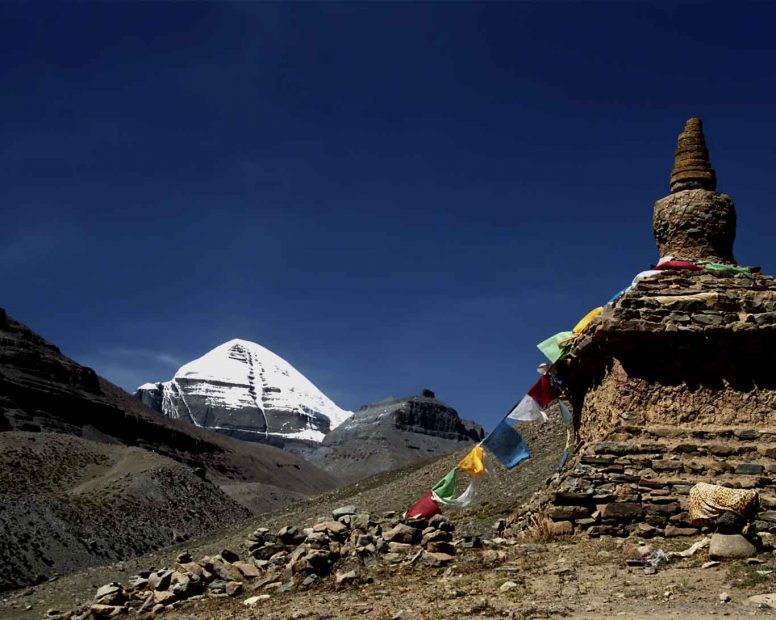
Of several mountain ranges, the Kailash has been deemed sacred by multiple faiths since ancient times. Believed to be the axis mundi (cosmic axis), Kailash is regarded as the celestial pole that connects the earth and the sky. It is supposedly here that the four compass directions merge, thus establishing a connection between the physical and the metaphysical realms. Not surprisingly, this mountain range is surrounded by several inexplicable mysteries. In this article, Soulveda explores a few of them.

An unconquerable peak?

“No mortal ever be allowed to walk atop Mount Kailash, where, among the clouds, is the abode of the gods. He who dares to start the top of Mount holy and see the faces of the gods will be put to death!” goes an ancient Tibetan warning. But, despite the warning, history indicates that several mountaineers attempted to scale Kailash, to reach its summit in the early 1900s, only to have their ambitions thwarted. Colonel R C Wilson was a mountaineer who was determined to climb Mount Kailash. But according to his article in the Alpine Journal, just when he discovered an easy pathway to the summit of the mountain, heavy snow began to fall, making the ascent impossible.

A few years later, yet another climber Herbert Tichy attempted to climb Kailash. But according to the book The sacred mountain: The complete guide to Tibet’s mount Kailas by John Snelling and the 14th Dalai Lama, when Tichy was seeking permission, he was told, “Only a man entirely free of sin could climb Kailash. And he wouldn’t have to actually scale the sheer walls of ice to do it—he’d just turn himself into a bird and fly to the summit.”

As of today, Mount Everest in the Himalayan range—the world’s tallest peak—has been scaled several times by mountaineers. Kailash, on the other hand, which is relatively a smaller peak, remains unconquered.

He further writes that it is impossible for an ordinary person to reach Shambala for there are poisonous streams and gases. And those who do, vanish forever, never to return.

A man-made monument?

Many researchers speculate that the shape of Kailash is too precise to be formed by natural phenomena. And one hypothesis is that Kailash could be the mankind’s largest known pyramid, part of a hundred-pyramidal-complex. This idea probably sprung forth because the Egyptian word ‘Mer’ often refers to a monument of great importance, usually a pyramid. And incidentally, Mount Kailash is also referred to as Mount ‘Meru’.

Author Davinder Bhasin has collated several researchers’ findings in his book An Audience with God at Mount Kailash: A True Story. He writes that since the mountain takes a pyramidal shape and adheres to the rules of Vastu Shastra, it could very well be a man-made monument. He further suggests that Kailash pyramid could be at the centre of other mysterious monuments such as the Stonehenge, and the pyramids of Egypt and South America, and that they could be interconnected by underground tunnels. In fact, according to him, research indicates that the Great Sphinx of Giza (a lioness with a pharaoh’s head which protects underground tunnels) faces Mount Kailash, as if protecting a secret passageway.

Home of the Shambalas?

According to ancient Hindu and Tibetan Buddhist texts, the region just north of Tibet in and around Mount Kailash is where a mythical city called Shambala lies. It is believed to be a spiritual city which connects the physical realm with the metaphysical realm. Protected by unknown forces of energy, this is where super-humans supposedly reside (in deep meditation), guarding a great secret.

Whether Shambala really exists, is unknown. Russian theosophist and philosopher Nicholas Roerich was one of the many people who was convinced of its existence. In his book Shambhala: In Search of the New Era, Roerich writes, “Verily, verily, the people of Shambala at times emerge into the world. They meet the earthly co-workers of Shambala. For the sake of humanity, they send out precious gifts, remarkable relics.” He further writes that it is impossible for an ordinary person to reach Shambala for there are poisonous streams and gases. And those who do, vanish forever, never to return. According to Roerich, “Only few of them reach the holy place, and only if their karma is ready.”

Manifestation of duality?

The Kailash Manasarovar lake shaped like the sun is among the world’s highest freshwater lakes. Its water tastes sweet and pilgrims believe the lake is sacred. Adjacent to it, Lake Rakshastal, on the contrary, is shaped like a crescent moon and is among the world’s highest saltwater lakes. The lake is believed to be evil. Just like Mount Kailash, the two lakes—Manasarovar and Rakshastal—are considered sacred in several faiths. They are said to represent the duality of creation—the good and bad, the solar and lunar forces, and the positive and the negative energy respectively.

Here is the interesting part: the two lakes are located right next to each other, divided only by a thin isthmus. However, Lake Manasarovar remains placid and calm all year round whereas Rakshastal stays constantly turbulent and stormy. What’s more, several pilgrims have reported that Manasarovar gets illuminated by mysterious dots of light at night. And as of today, no one can be sure of what the lights are, or how they are caused.

THE BOUNDLESS ELEMENT OF MUSIC: IN CONVERSATION WITH CHANDANA BALA

Carnatic music

Music, by its very nature, is boundless. It flows effortlessly across eras, blurring geographical boundaries. In its journey across seas and continents, music embraces diverse cultures and traditions. Genres and styles come together, spurring inspiration and creativity, turning man into an artiste. For these reasons and more, music is a collaborative force that provides a fresh departure for an artiste every time their penchant for music takes them to unchartered territories.

Once an artiste has deep dived into the ocean of music, their imagination keeps searching for something new. On a quest to engage with such musical stories, Soulveda met with Carnatic singer Chandana Bala Kalyan whose rendition of a jazz composition in the Carnatic style has inspired many a music aficionado. In an exclusive conversation with Soulveda, the soulful artiste talks about her musical journey that began at a very young age, her understanding of spirituality through her music, and her interaction with musical genres.

Where and how did your musical journey begin?

I belong to a musical family. My father is a violinist and my mother sings too. Music was part of my growing up years. I started learning music at a very young age of four. My father tells me I could sing compositions he taught to his older students. At the age of eight he started teaching me, and I started performing when I was 11. There has been no looking back ever since. Carnatic music has been a part of my identity and life. I don’t see myself doing anything other than singing. It is my core strength.

Your father is a violinist and your mother sings in Telugu. How did they influence your journey in the world of music?

My father is a Karnataka violinist who also taught me how to use the violin. He inculcated the discipline in me to practise with the manual tanpura. When I was 10, he would wake me and my older sister up at 4 am to practice the basics of Carnatic music. My mother is not a professional singer, but she always sings while doing her chores. This discipline and influence encouraged me to learn music professionally.

You have remained loyal to Carnatic for long. How did other genres enter a rather strict musical realm?

When I was in school, I sang patriotic songs and light music, but never really took it up professionally. I also had offers to sing for Kannada movies, but I chose to take up Carnatic music because my father wanted me to have a strong foundation. For him, everything else was a distraction. I am grateful he made me learn Carnatic. Then there was the influence of ghazal singing when I used to listen to Hariharan especially his album Hazir. But I never really tried to learn ghazal professionally. When I moved to Bombay, I got the opportunity to work with a few bands who wanted me to sing in a different manner. I started singing Alaap in a different way and added folk elements to my singing. That’s how I started exploring other Indian genres of singing.

Your interpretation of Dave Brubeck’s Take five and Unsquare Dance is riveting. How did you think of marrying two completely diverse genres of music such as jazz and Carnatic? 

I was fortunate to sing in Sanjay Divecha’s band. After working with him, I started listening to blues and jazz. Sanjay taught me the basics of jazz. That’s how my journey in jazz began. Then I met Sankarshan ‘Shanks’ Kini who was also learning from Sanjay. He was learning jazz through sargam and he taught me the technique of learning jazz compositions using sargam, modulations and variations. Jazz requires an accurate pronunciation of lyrics, and since I have a South Indian accent in my English I never tried singing jazz professionally. But instrumental jazz inspired me, and I wanted to learn how to use its elements in my singing to blend the two.

“Any kind of art can bring out the creative side from within. And the creative side of your personality is who you truly are.”

An artiste’s creative expression is part of their identity. Would you say your music reflects who you are?

I think all human beings have many layers. To be honest, when I started my journey, I didn’t really venture into spaces other than classical. I was a conformist, in a sense. When I used to learn composition, I used to feel I have a rebel within because at times, I used to sing songs that were outside the genre of Carnatic. This was before I started experimenting various genres. I was trying to force myself to conform to the norm. When I started learning jazz, I realised this was also something I enjoyed. When I explored Sufi composition, I loved it. It was like I had discovered something new inside me, and I wanted to incorporate it into my musical strengths.

Musically, you also delve into bhakti and Sufi genres. Would you say you are spiritual or have these expressions emerged out of years of exposure, knowledge and practice?

My guru ji gave me a task when I was 29. He asked me to translate 600 odd Kannada shlokas into English. These shlokas had a lot of spiritual elements, references to the Ramayana, the Mahabharata and the Bhagavad Gita. It was at this time when a desire to understand the realm of spirituality was ignited. Then I started reading and singing Kabir’s couplets. I started looking for compositions in Madhu Bhakti similar to Sufi compositions. Then I started incorporating Annamacharya’s and Meera Bai’s compositions into my concerts of spiritual poetry. This is when my work on Marma (a confluence of bhakti poetry) began.

I don’t know if I am spiritual, but I do believe there is no living soul that can’t be moved with music. Every soul has some reaction to music. That’s why I feel blessed to have received the gift of music. Music has healed me several times, allowing me to deal with personal crises and every challenge that has stood in my way.

Any form of art, music especially, brings out the best in people. It can influence positive change. How do you use your art to do this?

I do agree that any kind of art can bring out the creative side from within. And the creative side of your personality is who you truly are. Music sets you free, it allows a person to move beyond their inhibitions.

Tell us about your collaboration with an initiative like Fakiri. What brings about this artistic relationship?

Fakiri happened in my life due to a dear friend of mine. I collaborated with Fakiri in its Season 1 in 2016. It was a break for me as it helped me put my material out there and see whether it was working for me and my audience. I didn’t know then, the dynamics of managing the stage. Prior to this, I had been doing Carnatic baithak kind of concerts. So, this was a new experience for me.

I think Fakiri is an incredible platform, especially in times when film and pop music have taken over. The festival gives importance to literature, folk genres, light classical and semi-classical genres. Such initiatives help musicians who are striving to do meaningful work. I hope this sets a trend, encouraging more concerts like this. I feel honoured to have shared this platform with artistes like Mame Khan, Harshdeep Kaur and Kabir Cafe.

(With inputs from Sai Priankaa)

  • h
    Mumbai-based Chandana Bala Kalyan is a Carnatic classical vocalist who also sings for classical dance and cinema. An independent artiste, Chandana’s interpretation of the cover of Take Five has had millions of views on social media. She is most known for her interesting experiments with genres such as Indian folk, Sufi, devotional music, jazz and the blues. She is also at the helm of creating an …   Read more

21 Tips for Traveling with Diabetes

‘Travel’ the word makes us feel the adrenaline gushing, isn’t it? The thought of exploring places can be an exciting experience. Do I see a crease on your forehead? Worried about how the change in routine will affect your food intake?  The change in time zones can disturb diabetes management. So here we get a few easy to follow tricks to maintain diabetes and also enjoy your travel. So plan a little beforehand to enjoy without hindrance.

Before You Start Traveling

  1. A visit to the doctor is a must to make sure you are fit enough for the trip. Questions to ask your doctor
    1. What activities are you planning to be involved in? Trek/Diving/Swimming?
    2. Are you on insulin? If so, please check for the insulin intake variation with different time zones
    3. Prescription copy of medicines in case you need to purchase in unknown places.
    4. In case you need vaccines
    5. A letter stating yourself to be diabetic and why you need your medical supplies
  2. Keep a note of pharmacies and clinics in and around the locations you are to visit
  3. Wear a medical ID bracelet stating you have diabetes and if any other health conditions
  4. Keep travel insurance id handy in case you miss a flight or need medical assistance
  5. Order the flight meals as per your meal plan or make an alternative arrangement
  6. What to Pack?
    1. A carry bag with medical supplies. The medical supplies consisting of insulin, snacks and glucose tablets
    2. Take an extra month’s supply. Pack the medicines as they come in pharmacy bottles. You can even ask the pharmacist to attach extra labels to plastic bags.
    3. Pack healthy snacks like fruits, nuts and raw vegetables
  7. Security Check at Airport
    1. Get TSA notification card. The card will help you to go through the screening process with ease.
    2. Diabetics are allowed to carry 3.4 oz. liquid medicines, gel packs to keep the drug and juice cool
    3. The glucose monitor and insulin pump can get damaged while scanning through the x-ray machine. So you can ask for hand inspection of the devices.
  8. For extra information, you can check Traveler’s Health site

While Traveling

  1. Driving? Pack a cooler with healthy foods and enough bottles of water and fluids
  2. Make sure insulin and diabetes medicine are not stored in direct sunlight or in a hot car. Keep the medication in the cooler. Care to be taken, so insulin is not directly on the ice or a gel pack.
  3. Excessive heat can damage blood sugar monitor, insulin pump and other diabetes-related instruments. The instruments are not to be left in direct sunlight, hot car, pool or beach. The condition applies to the test strips as well.
    1. With little awareness, you can find healthy food options for yourself at the airport and restaurant as well
    2. Nuts, Fruits, yogurt,and sandwiches
    3. Chicken and Fish in Salads (avoid the dried fruit and croutons)
    4. Eggs and omelets
    5. Burgers with lettuce wrap in place of a bun
    6. Fajitas(avoid the tortillas and rice)
  4. Avoid sitting in the same posture for long. Get up and move around in the passageway if you are in plane or train. In case you are driving, take a break.
  5. Set the alarms for medicine intake if you are one of the forgetful types or traveling in different time zones.

On Arrival at the location

  1. Due to travel and time zone, your blood sugar might be out of target range initially. Don’t fret! Monitor in intervals, body should adjust in a few days. Treat the high and low sugar levels as per the instructions of your doctor
  2. While involving yourself in physically active sports, do check your blood sugar levels before and after the activity. Make suitable changes in food, insulin and activity as required
  3. Different cuisine can be quite tempting. Mind You! Don’t go for the buffets. Order from the menu to suit your healthy choices
  4. Don’t get carried away and overdo activity when the sun is in his prime. Carry suntan lotions/slippers/sunglasses/umbrellas to protect yourself
  5. As the temperature soars, there will be variation in insulin levels in the body. So you might need to test your insulin levels frequently and adjust with insulin dosage and food.
  6. While traveling to a different country, you might not find everything like you do at home. So to be on the safer side, learn the local language phrases for “I have diabetes” and “Direction to nearest pharmacy?”
  7. Have wet wipes handy when you are outdoors. You need to clean your hands before checking the blood sugar levels.

Make Memories

Traveling with Diabetes can be quite challenging but not impossible. Surely, we cannot let it tie us down to our homes, can we? Just plan ahead, relax and enjoy your vacation.

Let YOUR DIABETES MANAGEMENT Effort Give A FRUITFUL RESULT, Put Your Small Step Towards a Diabetic-Free Life just like Vasudevan Nayar!!!

Vasudevan Nayar from New Delhi, age 71, had a history of diabetes but had been controlling it for 20 years with allopathic pills. Then his sugar level was getting high and finally he was landed to insulin intake. Vasudevan also had to start giving himself insulin shots with high dosage. The frequent testing and insulin injections turned his world upside down.

One Day he came across “Sugar Knocker”. With help of Sugar Knocker by Following Diet, and Doing Physical Activities, he was able to normalize the blood sugar level.

Sugar Knocker played a important role in his success. He said,“I came across a wonderful ayurvedic product Sugar Knocker, I took it for 3 months and my sugar levels were normalized. It is a safe and good sugar lowering product one can depend on…”

Bring Results to Your Diabetes Management Efforts With Sugar Knocker, By Making Simple Changes in Your Life!!!

ORDER NOW

NO ONE’S BORN VIOLENT

No one's born violent

In the fall of 1946, a boy was born into an unstable and abusive family. His mother was a teenager, a single parent who relied on her parents to raise her child. The boy’s grandfather was abusive, and grandmother mentally erratic. By the time he was in middle school, the boy began to display disturbing behaviour patterns. As a teenager, he was charged with larceny and fraud. At 27, he committed his first murder. In the following years, the boy, Ted Bundy, turned into a hardened criminal, who killed over 30 people before he was arrested and executed in 1989. Even after his death, his name haunts not only the victims’ families but the world at large.

Bundy’s violent streak stemmed from his disturbed childhood, where there was hardly any love and a whole lot of abuse. Even though young Bundy was good at academics and had enough work opportunities when he grew up, he remained aloof from society. While none of these factors can explain away the mercilessness with which he committed crimes one after another, it sure does explain the psyche of a violent person.

The first thing to understand about violence is that no individual is born violent. It is the grating circumstance that gives birth to it. Behavioural psychologists say, the absence of love and affection during childhood leaves a hole in the heart, which gets filled with hatred and angst. In her personal blog, US-based psychologist and independent forensic consultant Dr Kathryn Seifert explains, “Sometimes, the adjustment of a few factors such as establishing a close relationship with a supportive adult, receiving pro-social peer encouragement, or getting protection from a violent family, is what makes the difference between whether a person becomes a violent offender or a mentally-stable contributing member to society.”

A recent WHO study reveals that domestic violence affects approximately one in every three women world over, which is more than a quarter of women’s population in the world.

This being said, not every violent person ends up a coldblooded murderer. Sometimes, violence manifests itself in forms less severe, yet equally scarring. Incidents of brutality occurring in households or on the streets may not lead to homicide, but they just as well can destroy families and societies.

Strong family ties shape an individual. But at times, an inharmonious family becomes the weak link leading to violence, such as domestic violence. A recent WHO study reveals that domestic violence affects approximately one in every three women world over, which is more than a quarter of women’s population in the world. Dr Lisa Firestone, Director of Research and Education for The Glendon Association, has dedicated her career to studying domestic violence and the reasons behind it. Explaining its root, she writes, “There are two emotional dynamics that contribute greatly to domestic violence. One involves a destructive thought process that abusers experience both toward themselves and their partners. The other factor involves a harmful illusion of connection between a couple… that feeds into a sense that another person can make you whole and is responsible for your happiness.”

Violence can find people anywhere. Sometimes at home, other times on the streets. It just takes a misguided individual acting on a whim or out of pure resentment. “Hateful beliefs such as racism, anti-Semitism, and misogyny allow whole groups to be dehumanized. The more any group is misunderstood, the more the unknown can fuel fear and misunderstanding. Fear and misunderstanding can lead to hateful words and violent behaviours,” explains Dr Bruce D Perry, Senior Fellow of the Child Trauma Academy, in his blog.

Respect for one’s own life and that of others is the starting point of changing violent behaviour. “People can learn more about other religions, cultures, and worldviews. Prevent degrading, humiliating, or bullying behaviours. Don’t laugh at jokes that use hateful ideas—and certainly don’t repeat them,” says Dr Perry.

Violence impacts not only the person who is subject to it but also those who inflict it upon others. Eventually, it affects the society, as a whole. The effect of violence may envelop communities and societies, but its cause lies within the individual. And, it boils down to the individual’s choices and actions. It is about making the right choice, even if it is the harder choice to make; it is about waging a war with the inner demons, until the calm quells the noise within.

GOD MUST LOOK LIKE MUSIC: IN CONVERSATION WITH HARSHDEEP KAUR

Harshdeep Kaur and sufi music

If God exists, how does God look? There may never be an answer to this question, but if one had to guess, God must look like music. And if God looks like music, God’s angels must look like whirling dervishes. If music connects you with the divine, Sufi music lives for the sake of the divine. In praise of the divine, one with the divine, Sufi verses, as if, resurrect a lifeless soul.

Sufi music is the ‘form’ in which ‘the formless’ seems to manifest effortlessly. The singing of a Sufi singer washes over the soul, soothes every wound and makes you whole again. If her voice carries an ode to the divine, her eyes bear a glimpse of the divinity. This singer rouses fervent devotion and passion with her songs because she doesn’t just sing the verses, she feels and lives them.

This true passion of a Sufi singer comes alive in the voice of Harshdeep Kaur, fondly known as ‘Sufi Sultana’. In an exclusive conversation with Soulveda, the vibrant, turban-clad artiste talks about her connection with music, the divine in every note, and the gratitude that fills her heart as she goes about her life armed with the magic of music.

Your interaction with music began at age six. How does such exposure impact an artiste’s journey?

Things that you learn at an early age always stay with you. I started learning Indian classical music when I was six. I’m deeply thankful to my parents who recognised my talent and encouraged me to take formal training in music. My training helped me become what I am today.

You inherited music from your father. How did it influence the parent-child relationship between you two?

My father and I share a very special bond. I’m his little princess. I have always seen him working hard towards making my dreams come true. But at the same time, he has always taught me to lead a normal life. He made sure I completed my education, went to college and enjoyed regular college life like any other girl would have.

Sufi music has been the foundation of your musical journey. How did your initial interaction with Sufi music begin?

My first introduction to Sufi music was through Gurbani. My mom used to recite Shabadsto me when I was little. During my teens, I started listening to a lot of music by Ustad Nusrat Fateh Ali Khan, Reshma, Abida Parveen, and Wadali Brothers. I immediately fell in love with the mystical quality of the songs they sang.

Sufism is one of the purest connections with the divine. What has this connection done for you as an artiste?

I feel God is everywhere, in every particle, and music is the best way to connect to God. Whenever I sing Sufi kalaams I feel a certain connection with the almighty.

Listening to a lot of spiritual music has also made me calm. You start seeing the positive in every situation. It has also taught me to be grateful for everything.

I have learnt that to be a good artiste you also need to be a good human being. The goodness of the soul reflects in the voice.

Do you believe artistes rooted in deep traditions and heritage need to adapt to a changed musical universe today?

Our traditions and heritage are precious! There are artistes who have dedicated their whole life in preserving them and taking them forward to the next generation. Today, the ‘sound’ of their music might be changing but the ‘soul’ will always reflect the richness of their art.

The world of music and artistes has so much to offer. As an artiste, what are your lessons from it?

I have grown up listening to artistes like Jagjit Singh, Reshma, Lata Ji, Asha ji. When I look at their journey, it inspires me to excel in my art. I have learnt that to be a good artiste you also need to be a good human being. The goodness of the soul reflects in the voice. Also, being my own critic helps me improve my art.

How has the role of an artiste changed over time? What responsibility does an artiste carry to nurture art and culture?

I feel, as an artiste, it is my responsibility to use my music as a tool for social change. Music has the power to connect, it has the power to heal. I’ve been associated with social causes like ‘Save the Girl Child’, ‘Girl Education’, ‘Clean Environment (Hawa Badlo)’, and others. I continue to support such causes through social anthems and live performances.

Tell us about your collaboration with an initiative like Fakiri. What brings about this artistic relationship?

Fakiri Festival is a great initiative to bring forward folk and Sufi music for music lovers across generations. It will help rediscover our traditional roots. I’m happy to be associated with this festival. It’ll be a beautiful stage to sing my favourite songs for the audience.

  • h
    Harshdeep Kaur is an Indian Sufi and playback singer who has worked with some of the most renowned music composers such as AR Rahman, Amit Trivedi and Pritam Chakraborty. As much as she is famous for her Bollywood songs, she is also known for her soulful Sufi renditions. At a singing competition, Kaur was given the title of ‘Sufi Ki Sultana’ by actor Amitabh Bachchan. While performing Sufi songs,…   Read more

Fruits and Vegetables for Diabetes

Diabetes is an ailment wherein blood sugar or blood glucose level goes up consistently.  Prevention is better than cure and so by following certain rules we can keep our blood sugar level stable to control diabetes which is the main cause of diabetes.

We are aware of the fact that any kind of disease requires immediate treatment as otherwise it may get aggravated. People are not aware of the mishaps of diabetes which can cause obesity, kidney complications and heart ailments.

Diabetes has no treatment via drugs till this date but it can be controlled by keeping a check on the blood sugar level. Right diet can become a wondrous treatment for this disease.

To start about the do’s and don’ts of Diabetes we come to following rules:

  • Avoid junk and sugary food. The reason being, carbohydrates metabolism acts faster and thereby elevate the sugar level.
  • Intake lot of water.
  • Take fibrous food.
  • Abstain taking three square meal. Rather take five small meals through the day to keep blood glucose levels stable.
  • Then comes vegetables which need to be taken in diet. These are Spinach, Bitter Gourd, Okra, Eggplant, Sweet potato, Kale and Carrots
  • Avoid taking Potatos, Corn and Peas
  • There are certain Nuts and seeds which are good for health of these patients. They are Fenugreek seeds, Sesame Seeds, Date, Almonds, Walnuts and Pistachios.

Following is the list of fruits that are advantageous for diabetic patient:

  • Apple a day keeps doctor away. They contain antioxidants which reduce cholesterol levels, boost the immune system and cleanse the digestive system. They also help in digestion of fats.
  • Orange– It is a Citrus fruits that is rich vitamins A and C, which act as powerful antioxidants.
  • Guava– Guavas are rich in vitamin A and vitamin C and has good amount of dietary fiber. This is good for constipation which is commonly suffered by diabetics.
  • Pears– These fruits are rich in vitamins and fibre.
  • Peaches– They are good for diabetes patient.
  • Kiwi– They are good for diabetics but should be avoided in diabetic nephropathy patients due to high potassium content.
  • Berries– They are rich source of antioxidants. All kind of berries like Strawberries, blueberries, raspberries, cranberries and blackberries are good for diabetes patients.
  • Starfruit– They are good for diabetics as they helps to lower sugar but at the same time should be avoided in diabetics with renal problems.
  • Cherries– Cherries have very low GI and are good for diabetics.
  • Black Jamun– Last but not the least black jamun is good for diabetes.

There are certain Myths and facts about Diabetes.

They come as following

Carbohydrates

Carbohydrates are taken to be harmful for diabetic patients.The carbohydrate having low glycemic index (GI) can be taken by diabetic patients. It could be oatmeal, whole grain bread, dried beans and legumes and low starch vegetables like spinach, tomatoes and Broccoli.

Eating sugar causes diabetes

According to American Diabetes Association , intake of sugar in lot of quantity is not alone the cause of diabetes.  Overweight, high Blood pressure, living sedentary mode of life is certain risk factors that can lead to Diabetes. Drinks like sodas and fruit punches, are high in empty calories, and recent studies have come out with the fact that there is high risk of diabetes. Other form of sweets is not the cause of diabetes.

Starchy foods are forbidden

Starchy foods contain carbohydrates, and so they can fit into meal plan.
Diabetes diet can include any kind of fruits. It is true that some fruits contain more natural sugars than others but still one can enjoy any of them on sticking to the proper portion.

  • 1/2 medium banana
  • 1/2 cup cubed mango
  • 3/4 cup cubed pineapple
  • 1 1/4 cups strawberries

So Diabetes can be controlled by following certain rules in life

Sugar-free products are healthy

It is generally taken for granted to eat sugar-free, processed foods. Even sugar free products contain a lot of carbohydrates, fat, or calories. So, check nutrition label for the total carbohydrate content.

Precaution of the food while taking medication

When one is on diabetes medication, one still has to abstain from eating anything one want. Healthy diet to control diabetes is must.

Fats don’t matter

According to American Heart Association, type 2 diabetes increases risk of heart attack and stroke. One of the reason is that many people with diabetes are overweight. They often have high blood pressure or blood cholesterol levels.So to get rid of risk of heart trouble, limit saturated fat in diet.

Sugar Knocker – Herbal Supplement to Rejuvenate Pancreatic Beta Cells & To Increase The Uptake of Glucose by Body Cells

Based on Ancient Ayurvedic Recipe and Principles of Aahaara, Vihaara, Aushadhi, Sushrut Ayurved Industry with 28+ years of experience in medicinal plants, formulated Sugar Knocker.


A unique combination of 11 natural herbs extracts such as Bitter melon, Gurmar, Vijayasar, Salacia, Black Jamun, Indian gooseberry, Heart-leaved moonseed,Holy Basil,Turmeric, Cinnamon, Banaba.

These natural herbs lower blood sugar and also work towards reducing the damaging effects of the disease, unlike most prescription drugs which focus only on reducing blood glucose. The all natural Sugar Knocker works along with your prescribed drugs without any side effects.

Opt Sugar Knocker Today & Bring Results to Your Diabetes Management Efforts


ORDER NOW

THE DEEP ROOTS OF FOLK MUSIC IN THE SOIL OF CULTURE

Folk music

Folk music is much more than just a genre of music. It’s a bridge that connects the past of a culture to its present; it’s that subset of art which effortlessly sets people free and the glue that holds them together; it’s a language that is understood by all.

Folk music unleashes the kind of energy that lifts the spirits, warms the heart, and inspires joy at every instance it’s heard. These traditional songs turn back the clock every time a folk musician takes the centre stage. And a name that instantly comes to mind is Mame Khan, whose warm, cheerful, reverberating voice has made him a household name. Belonging to the colourful community of Manganiyar, whose music transcends time and place, Khan has exposed an entire generation of young music lovers to the rich and vibrant sound of folk music.

In an exclusive conversation with Soulveda, the artiste talks about his passion for folk music, the Manganiyar, and his cultural roots.

You come from a family of singers which has breathed folk music for more than 15 generations. Tell us how your heritage has driven your passion for folk music?

I think I am very lucky to be part of one of the last few generations in India who spent their childhood without TV and video games. In my village where I grew up, I was surrounded by sand dunes and music. Growing up in a musician community, music was part of my daily life, especially since my late father Ustad Rana Khan was an inspiration to me every single day. Seeing him travel the country, coming home with new stories about music and the roots of our tradition inspired me to carry on the legacy of my father and community.

Folk music, which is all about pure vocals and raw sounds, has flourished for thousands of years. What is its place in times of electronic music?

If you ask me about the Manganiyar folk music, I would not say the music is about pure vocals and raw sounds only. In fact, our singing style can almost be called semiclassical and the sounds of our signature instruments such as the Kamaycha and Sarangi are very versatile and complex. Our music is so much about rhythm, and so is electronic music. I think there is no competition between genres. Even I create a lot of fusion with new sounds and a more modern structure. Change is good, but without forgetting your roots.

Being a folk musician means being one with your cultural roots. Do you believe a folk musician must adapt to a changed musical universe that exists today?

I cannot speak for folk music in general, but I can speak for my music. I feel there is no compulsion to change or adapt the music in a drastic way. Some elements of our music are just timeless, and some can be changed. For example, I often change the tempo of my new compositions, which gives a new feeling, but the beauty of the original folk composition remains.

Exposure to music at a young age helps one evolve and adds more dimensions to one’s personality. Do you encourage children to sing or perform, considering your musical inclination was nurtured the same way?

There is an entire generation of Manganiyar children, hungry to perform, ready to sing and play. I especially have a very young band to encourage all new talent to come forward to practice and play.

Belonging to the Manganiyar community, you sing in praise of the Hindu deities, your music is an amalgam of elements from different cultures. What role does this play in harmonising the inter-cultural relationships in today’s social climate?

I think our community can be seen as a good example of tolerance. Belonging to the Muslim faith, we do sing in praise of the Hindu gods as well. Music speaks one language and I will be glad if music can connect people. But at the same time, music cannot replace the role of responsible politics and good governance.

Tell us about your collaboration with an initiative like Fakiri. What brings about this artistic relationship?

Fakiri, to me, is a ‘soul project’ and I know this is true also for the people behind it. Fakiri is a platform where music can be experienced in its original form without any boundaries. The artistic collaborations they bring on one single stage is true to its concept. I am really looking forward to our concert.


h
Mame Khan is a Rajasthan-based contemporary folk artiste from the Manganiyar community known for a unique oral tradition of storytelling through folk, devotional songs. From a small village in Rajasthan, Mame Khan and his band of Manganiyar musicians have reached national and international music platforms.

How to Control Your Diabetes with Ayurvedic Treatment

We all are aware of the fact that Diabetes is a Chronic Metabolic illness in which the body is not able to make proper use of glucose which result in high blood sugar level. Now, this excess glucose level in the blood leads to increased level of glucose in urine. This increases urine output which leads to dehydration and rise in thirst. This disease needs to be managed carefully by following certain instructions like diet plan and certain Do’s and Don’ts.

8 Factors That Lead To Diabetes

  • Excessive intake of food like fried foods, creams, etc
  • Lack of exercise
  • Mental stress and strain
  • Overeating
  • Obesity
  • Excessive intake of sugar
  • Excess of proteins and fats
  • Hereditary factors

Major side effects of Diabetes

  • Heart Disease
  • Kidney Disease
  • Eye related problems
  • Mental Health problems

Statistics

Worldwide statistics show an alarming picture of number of Diabetic patients. 422 million people are having Diabetes. This is estimated 1 in 11 of the world’s Adult population. Research shows that in India 15.2 million of 18 years of age and older have Pre-Diabetes.
Besides this, the cost of this treatment in India is very high. This decreases the survival rate of the patients suffering from Diabetes.

But not to worry, we have an alternative system of medicines, called Ayurveda.

What is diabetes according to Ayurveda?

Ayurveda is 5000 years old system of natural healing that has its origin in Vedic culture of India.
There are three primary forces that are responsible for characteristic of mind and body. These are Vata (wind), Pitta(Fire) and Kapha(Earth). A balance is needed in these elements for sound health.

Vata (wind)

When it is balanced, an individual is lively, creative but when it is not balanced, a person experiences anxiety, insomniac, dry skin, constipation and difficulty in focusing.

Pita (Fire)

When it is balanced, a person is warm, friendly, disciplined. But on the other hand, when it not balanced, a person tends to be compulsive, irritable and may suffer from indigestion or an inflammatory condition.

Kapha (Earth)

When it is balanced, a person is sweet, supportive, and stable. But when it is not balanced, a person may experience lethargy, gains weight, and gets sinus congestion.


Now according to, diabetes is a result of agni or Digestive fire. This activates high blood sugar levels.

According to Ayurveda if Vata (Air), Pitta(fire) and Kapha (Earth and water) are in balance, then body is said to be in healthiest state. Diabetes is caused by imbalance of Pitta in body. Vata, Pitta and Kapha are three elements which are Doshas in Ayurveda.

Diabetes is a metabolic Kapha type of disorder. It considers diabetes as a metabolic kapha type of disorder, in which decline in activity of agni can cause increase in blood sugar. Diabetic treatment in Ayurveda is done by using diet modification, lifestyle changes, Panchakarma and herbs.
A proper meal plan along with regular activity is good for treatment of Diabetes. Physical Activity is important. Regular activity along with proper meal, taking prescribed medications and stress management, all go in a long way in Ayurvedic treatment of diabetes. Consistent exercise can lower blood glucose.

In Ayurveda diabetes is called MadhuMeha, which correlates to type 2 Diabetes which occurs later in life and whose contributing factors include excessive deep over indulgence in food and sweets plus lack of physical activity.

According to Ayurveda type 2 diabetes occurs primarily due to imbalance or excess of Kapha Dosha. Type 1 diabetes is due to an imbalance of Vata Dosha.

There is a three step solution that helps to balance the Kapha and Vata Dosha

  1. Aahara: Diet is the first approach that we can take to create and maintain ideal health and to reduce the symptoms of illness by adjustment in diet and eating habits can controlled sixty percent of illness solely. Always we should be aware of what, when and how we are eating.
  2. Vihaaraa: Acharya Charaka believes that strenuous exercise immediately relives diabetes symptoms and bath with medicated water and application of paste of certain healing ingredients on the body are also helpful. Ancient ayurvedic texts clearly mention lack of physical activity as being one of the main reasons for diabetes and exercise plays a major role in carbohydrate metabolism and decreasing blood glucose level.
  3. Aushadhi: The first two pillars (Ahara, Vihara) are concerned with diet and lifestyle. When we follow their principles, the seeds of disease never get sown. They educate us to how to live life in harmony with natural law. The imbalances that cannot be handled by these two pillars are managed by Aushadhi that is concern on treatment of disease. Mainly ayurvedic medicines are formulated using a mix of herbs and other plants. Ayurveda is proved that is a capable of overcoming various health problems that occurs in human body.

Irrespective of the system of medicine being followed to manage diabetes – whether Ayurveda or Allopathy; diet restrictions, active lifestyle and medication are the three principles that have to be adhered to according to the physician’s advice.

Sushruth Ayurved Industries offers you a natural way to curb your diabetes.


Based on the ancient ayurvedic wisdom of managing your Aahara(Diet), Vihara(Lifestyle) and Aushadhi(Medicine).
Sugar Knocker focuses on holistic health improvement along with solving problem of diabetes. It ensures to control your diabetes as well as rejuvenate entire body of the diabetic. Rejuvenation comes through healthy lifestyle, proper diet and of course, the herbal medicines. Sugar Knocker not only focuses on controlling sugar level but also starts working on a root cause of diabetes. In short it gives permanent solution by removing problem from root and not temporary by controlling sugar level.

Statistics reveal that 87.4% people have been benefitted by our Ayurvedic Treatment for Diabetes via Sugar Knocker.

The Herbal Ingredients of Sugar Knocker & How this Unique Formulation Helped 1000s of Diabetic Across The Globe???

Sugar Knocker is made up of 11 natural herbs extracts such as Bitter Melon, Gurmar, Vijayasar, Salacia, Black Jamun, Indian Gooseberry, Heart-leaved moonseed, Holy Basil, Turmeric, Cinnamon, Banaba.

When taken over a period of time; Sugar Knocker can help not only to regulate blood glucose, but also helps to rejuvenate your pancreatic beta cells and helps to avoid further complications of diabetes such as microvascular damage, diabetic retinopathy, etc…

When Natural Herbs are Good for Life, Why aren’t we use them to CURB DIABETES?


Order Sugar Knocker Now

Best 5 Amazing Low Carb Recipes for Type 1 Diabetic

Low Carb Recipes for Type 1 Diabetic

Diabetes has become an epidemic in the recent years with over 400 million people affected worldwide. Diabetes is a physical condition wherein the body is unable to process the carbohydrates completely.

The autoimmune process destroys the insulin-producing beta cells in the pancreas in type 1 diabetes. The diabetics need to inject insulin during the day to make sure glucose levels are maintained in the body.

Naturally one of the ways to achieve better blood sugar levels is by following a low-carb diet.

Coming to what amount of carbohydrates is ideal for the diabetics is a debatable topic. As per studies conducted, keeping in mind blood sugar levels, weight and other diabetes parameters, the carb when restricted to 20 grams per day is shown to give good results.

The right amount of carb is again dependent on the individual as the response varies. With blood glucose measurement before and after the meal you get a fair idea for intake of carbs.

Instead of completely giving up on carbs, a balanced platter of high-fiber with right nutrients with low carbs like vegetables, berries, nuts,and seeds should work fine for daily meals.

Before going to recipes let’s take a look at what foods would suit best?

Food to have daily

Anything grown and untouched and processed by human hands can be had.

  • Non-starchy vegetables (Most of them)
  • Eggs
  • Cheese
  • Meat
  • Poultry
  • Seafood
  • Avocados
  • Olives
  • Olive oil & coconut oil.

Food to have once in a while

  • Berries: 1 cup or less
  • Plain, Greek yogurt: 1 cup or less
  • Nuts and peanuts: 30-60 grams
  • Flaxseeds or chia seeds: 2 tbsp
  • Dark chocolate: Less than or equal to 30 grams
  • Pumpkin/Spaghetti squash: Equal or less than1 cup
  • Liquor: 5 oz or 50 grams
  • Dry red or white wine: 4 oz

Food not to consume

Diet high in carbohydrates can raise the blood sugar levels in diabetics.

  • Bread/pasta/cereal/corn
  • Vegetables high on starch like potatoes, sweet potatoes, yams and taro
  • Legumes like peas, lentils,and beans (green peas and snow peas do not fall in this category)
  • Whole fat Milk
  • Fruit other than berries
  • Juice/soda/punch/tea with sugar
  • Beer
  • Desserts/baked goods/candy ice cream

The 5 low-carb recipes are:

In the vegetarian category:

Millet Pulao

Ingredients

  • ½ cup foxtail millet
  • 1 ½ cups of water
  • 1 to 1 ½ tbsp oil
  • A bowl of chopped vegetables (carrot/beans/capsicum/peas)
  • Mint leaves chopped
  • ¼ tbsp of ginger garlic paste
  • Jeera
  • 1 bay leaf
  • 2 green cardamoms
  • 4 cloves
  • Cinnamon stick

Steps

  1. Wash and soak the millets in a lot of warm water for one hour
  2. In the pan, pour the oil and heat it
  3. Add dry spices and sauté
  4. Add ginger garlic paste till you get the aroma
  5. Add the chopped vegetables and mint and fry for few minutes
  6. Pour the water and add salt as per the taste
  7. Let the water come to boil
  8. Drain the water from the millets and add it to boiling water
  9. Keep the flame medium and let the millet cook fully
  10. Keep it covered for 7 minutes

Sprouts Roll

Ingredients

  • 2 tsp oil
  • 2 tsp ginger-garlic paste
  • ¾ cup finely chopped onions
  • 1 ½ cup boiled green gram sprouts
  • ½ tsp of turmeric powder
  • 1/5 cup finely chopped coriander
  • 1 tsp lemon juice
  • Salt
  • 4 rotis made from whole wheat flour

Steps

To make sprouts fry

  1. Heat the oil in the pan
  2. Add the onions and sauté it
  3. Add ginger garlic paste
  4. Add the sprouts
  5. Add turmeric powder and chili powder, continue stirring
  6. Add salt
  7. Add lemon juice and coriander and keep it aside

To Make Rolls

  1. Spread the roti
  2. Spread the required amount of sprouts mixture in the center of the roti
  3. Roll it up tightly

Here fresh rolls are ready to pack for lunch.

Ragi Dosa

Ingredients (1 cup = 250 ML)

  • 1 cup ragi flour
  • 1 cup Rava/ semolina / suji
  • ½ cup rice flour
  • ½ cup curd/yogurt
  • 1-inch ginger finely chopped
  • 1 green chili finely chopped
  • few curry leaves chopped
  • 2 tbsp coriander finely chopped
  • 1 onion finely chopped
  • 1 tsp cumin/jeera
  • ½ tsp pepper crushed
  • 1 tsp salt
  • 3½ cup water
  • oil for roasting

Instructions

  1. In a mixing bowl, add 1 cup ragi flour, 1 cup Rava, ½ cup rice flour.
  2. Add ½ cup curd, 1-inch ginger, 1 green chili, few curry leaves, chopped coriander, 1 onion, 1 tsp cumin, ½ tsp pepper, and 1 tsp salt.
  3. Add 1 to 2 cup water to make batter such that there are no lumps
  4. Rest the batter for 15-20 minutes.
  5. Add water as required and prepare a flowing consistency batter
  6. Pour the dosa batter over hot tawa
  7. Sprinkle ½ or 1 tsp of oil on tawa.
  8. As the dosa roasts to a golden brown, turn it over and cook.
  9. Finally, fold the dosa and serve instant ragi dosa with mint chutney.

Sprouted Grams Porridge

You can either make it at home or go for a ready-made available from Manna. A mix which contains the powder of various sprouted grains.

Steps to make Porridge

  1. It can be had it any of the following ways
  2. Mix half cup of milk with a half cup of water
  3. Boil for a while
  4. Add 2 tbsp of hurittu and stir continuously,so there are no lumps in it
  5. Add salt to your taste

Note: Instead of milk you can use buttermilk also,but this does not involve boiling.

This can make a healthy and quick breakfast option to suit you.

Barley Soup

Ingredients

  • ½ cup barley, soak for a couple of hours
  • 1 small carrot,
  • 5-6 cloves of garlic
  • 2 medium-sized tomato, pureed
  • a piece of ginger, grated
  • salt to taste
  • ½ tsp cumin seeds
  • 2 cups of water
  • ½ tsp roasted cumin powder
  • ½ tsp red chili powder
  • ½ tsp paprika
  • cilantro to garnish
  • 1 tbsp olive oil

Instructions

  1. Wash and soak barley fora few hours.
  2. In a pressure cooker, pour 1 tbsp oil. After a fewseconds and add jeera/cumin and let it splutter.
  3. Add grated ginger and garlic.
  4. Saute till the raw aroma is gone and add carrots and barley.
  5. After a few minutes add tomato puree to it.
  6. Let it cook until tomato is cooked. Add salt, red chili powder, paprika and mix well.
  7. Add water and cook until the barley pearls are soft. After opening the pressure cooker, let it simmer for additional few minutes. Sprinkle cumin powder and check salt at this time. Garnish it with cilantro.

So here you are with hot soup on a rainy day. Just right for your taste buds and friendly to your body too.

All our body types are different and unique. Knowing how our body responds to food with little trial and error, we certainly can make the right choices and make peace with ourselves. Choose Ayurveda along with your regular food. Sugar Knocker brings you the most natural products that are completely herbal and you can place your trust upon.

Rejuvenate Your Pancreatic Beta Cells & Reverse Your Diabetes Naturally with Sugar Knocker

We do NOT challenge conventional medicine but provide supplements that help diabetics to manage their condition better with the use of natural and time-tested ingredients. The all natural Sugar Knocker works along with your prescribed drugs without any side effects and will become an excellent addition to your diabetes management regimen.

Sugar Knocker not only focuses on controlling sugar level but also starts working on a root cause of diabetes. In short it gives permanent solution by removing problem from root and not temporary by controlling sugar level.


ORDER NOW